Compression Rules Format
Compression rules are JSON files loaded at runtime. They are intentionally data-only so new language packs and RTK command filters can be reviewed without changing engine code.
Canonical schema (source of truth):
open-sse/services/compression/rules/_schema.json(JSON Schema draft 2020-12). The examples below are illustrative — when in doubt, validate your pack against_schema.json.
Caveman Rule Packs
Section titled “Caveman Rule Packs”Caveman rule packs live under:
open-sse/services/compression/rules/<language>/<pack>.jsonEach pack contains replacements that apply to normal prose after protected regions are isolated.
{ "language": "en", "category": "filler", "rules": [ { "name": "question_to_directive", "pattern": "\\b(?:Can you explain why|Could you show me how)\\b\\s*", "replacement": "Explain why ", "replacementMap": { "can you explain why": "Explain why ", "could you show me how": "Show how " }, "flags": "gi", "context": "all", "category": "context", "minIntensity": "lite", "description": "Convert verbose questions into direct requests." } ]}Caveman Fields
Section titled “Caveman Fields”| Field | Required | Description |
|---|---|---|
language |
yes | BCP-47-like language key such as en, pt-BR, es |
category |
yes | Pack category filename/category, for example filler or dedup |
rules |
yes | Array of regex replacement rules |
rules[].name |
yes | Stable rule name |
rules[].pattern |
yes | JavaScript regex source |
rules[].flags |
no | JavaScript regex flags; default gi |
rules[].replacement |
no | Replacement string or fallback when replacementMap misses |
rules[].replacementMap |
no | Match-specific replacements keyed by normalized matched text |
rules[].context |
no | all, user, assistant, or system; default all |
rules[].category |
no | filler, context, structural, dedup, terse, or ultra |
rules[].minIntensity |
no | lite, full, or ultra; default lite |
rules[].description |
no | Human-readable rule summary |
Use flags when case-sensitive matching matters, for example article removal before lowercase prose
without stripping the OpenAI API. Use replacementMap when one regex has multiple alternatives
that need different outputs; this keeps JSON rule packs data-only while preserving the behavior of
the richer built-in TypeScript replacement functions.
RTK Filter Packs
Section titled “RTK Filter Packs”RTK filters live under:
open-sse/services/compression/engines/rtk/filters/<filter>.jsonEach filter describes how to recognize and compress a command-output family.
{ "id": "test-vitest", "label": "Vitest output", "category": "test", "priority": 92, "match": { "outputTypes": ["test-vitest"], "commands": ["vitest", "npm test", "npm run test"], "patterns": ["\\bFAIL\\b", "\\bPASS\\b", "\\bTest Files\\b"] }, "rules": { "stripAnsi": true, "replace": [{ "pattern": "\\s+\\[[0-9]+ms\\]", "replacement": "" }], "matchOutput": [ { "pattern": "All tests passed", "message": "vitest: ok", "unless": "FAIL|Error:" } ], "includePatterns": ["FAIL", "Error:", "Test Files", "Tests"], "dropPatterns": ["^\\s*$", "Duration\\s+\\d+"], "collapsePatterns": ["^\\s+at "], "deduplicate": true, "truncateLineAt": 240, "maxLines": 160, "headLines": 24, "tailLines": 40, "onEmpty": "vitest: ok", "filterStderr": false }, "preserve": { "errorPatterns": ["FAIL", "Error:", "AssertionError"], "summaryPatterns": ["Test Files", "Tests", "Snapshots"] }, "tests": [ { "name": "keeps failing tests", "command": "vitest", "input": "FAIL test/a.test.ts\\nError: boom\\nTest Files 1 failed", "expected": "FAIL test/a.test.ts\\nError: boom\\nTest Files 1 failed" } ]}RTK Fields
Section titled “RTK Fields”| Field | Required | Description |
|---|---|---|
id |
yes | Stable filter id |
label |
yes | Dashboard-readable name |
category |
yes | Filter family: git, test, build, shell, docker, package, infra, cloud, generic |
priority |
no | Higher priority wins when multiple filters match |
match.outputTypes |
no | Detector output ids that select this filter |
match.commands |
no | Command tokens that select this filter |
match.patterns |
no | Regex patterns that select this filter from output text |
rules.stripAnsi |
no | Remove ANSI escape sequences before regex stages |
rules.replace |
no | Ordered regex substitutions applied line by line |
rules.matchOutput |
no | Short-circuit output rules with optional unless guard |
rules.includePatterns |
no | Lines to prefer preserving |
rules.dropPatterns |
no | Lines to remove as noise |
rules.collapsePatterns |
no | Repeated matching lines that can be collapsed |
rules.deduplicate |
no | Collapse duplicate normalized lines |
rules.truncateLineAt |
no | Unicode-safe per-line character limit |
rules.maxLines |
no | Maximum retained lines before tail preservation |
rules.headLines |
no | Head lines retained during truncation |
rules.tailLines |
no | Tail lines retained for recent context |
rules.onEmpty |
no | Fallback message when filtering removes all content |
rules.filterStderr |
no | Normalize common stderr prefixes before later filtering stages |
preserve.errorPatterns |
no | Error lines that should survive truncation |
preserve.summaryPatterns |
no | Summary lines that should survive truncation |
tests[] |
no | Inline verification samples used by the RTK verify gate |
RTK applies declarative stages in this order: stripAnsi, filterStderr, replace,
matchOutput, dropPatterns/includePatterns, truncateLineAt, headLines/tailLines,
maxLines, and onEmpty.
Custom filters can be loaded from:
- Project
.rtk/filters.jsonfiles only after a matching.rtk/trust.jsonhash is present ortrustProjectFiltersis enabled. - Global
DATA_DIR/rtk/filters.json. - Built-in filters.
Project/global custom files may contain one filter object or an array of filter objects. Invalid custom filters are skipped with diagnostics; invalid built-in filters fail validation.
Project trust file:
{ "filtersSha256": "0123456789abcdef..."}The environment override OMNIROUTE_RTK_TRUST_PROJECT_FILTERS=1 trusts project filters without a
hash and should be limited to controlled local development.
Safety Rules
Section titled “Safety Rules”- Keep rules idempotent: running the same filter twice should not corrupt output.
- Preserve exact error text, file paths, line numbers, and command summaries where possible.
- Avoid rules that modify code blocks, JSON payloads, URLs, or secrets.
- Add unit coverage for new command families in detector/filter tests.
- Add
tests[]samples to every built-in filter and to shared custom filters.
Validation
Section titled “Validation”Rule packs are validated before use. Built-in Caveman packs and built-in RTK filters fail fast during validation so broken release assets are caught before shipment. Custom RTK filters are skipped with diagnostics when parsing or trust validation fails.
Focused validation:
node --import tsx/esm --test tests/unit/compression/rule-loader.test.ts tests/unit/compression/language-packs.test.tsnode --import tsx/esm --test tests/unit/compression/rtk-verify.test.ts tests/unit/compression/rtk-dsl-pipeline.test.tsHagiCode
HagiCode is an agentic coding workspace: structured workflows, multi-agent execution, and Hero Dungeon views turn ideas into shipped software.
Turn ideas into polished, usable software with a smarter, faster, and more enjoyable agentic coding workflow.
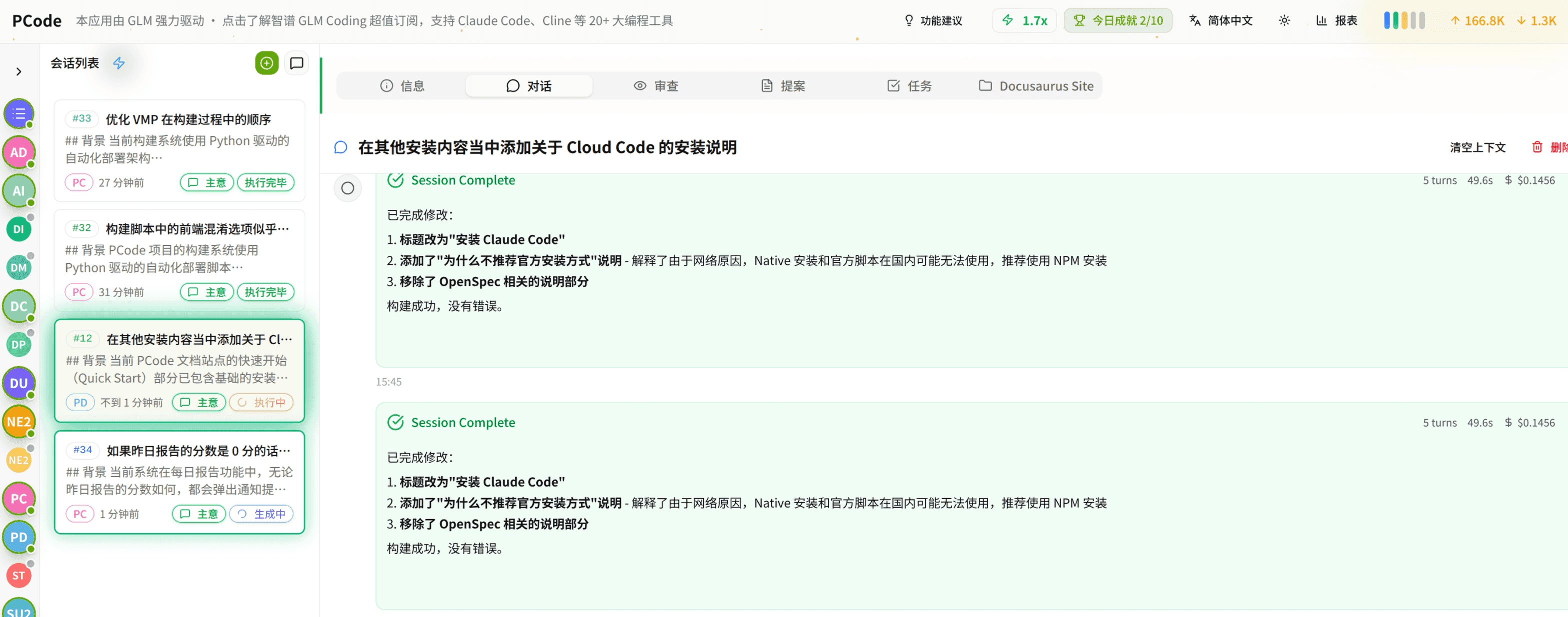
- SmartStructured workflows turn intent into an executable path from idea to shipped change.
- EfficientMulti-agent workflows keep research, implementation, and review moving in parallel.
- FunHero Dungeon interfaces make long coding sessions visual, collaborative, and rewarding.